

Table of Contents
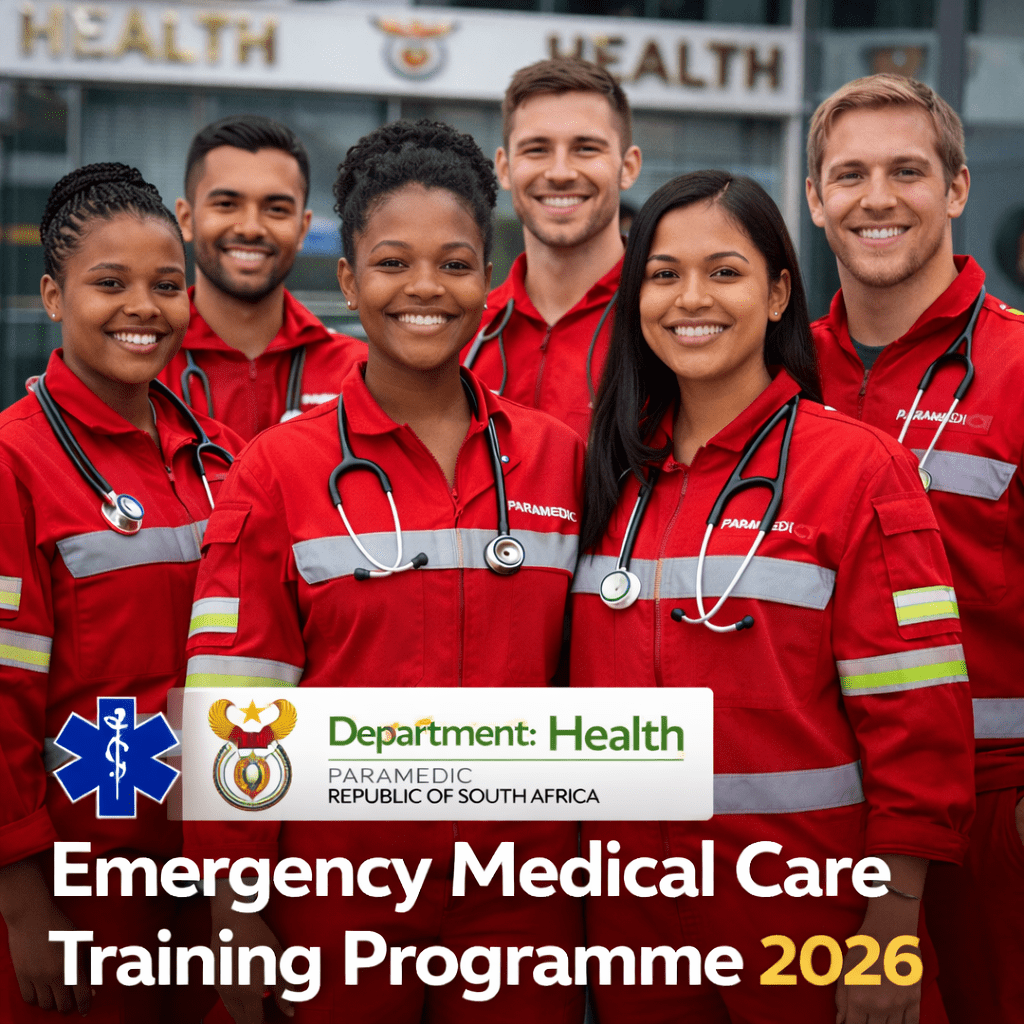
Emergency Medical Care Training Programme 2026
The Emergency Medical Care Training Programme 2026 offers an excellent opportunity for unemployed youth in South Africa who are interested in building a career in the healthcare and emergency services sector. This programme, introduced by the provincial health authorities, aims to equip young people with the skills, knowledge, and practical experience needed to work in emergency medical services and patient care environments.
Healthcare systems rely heavily on trained emergency medical personnel who can respond quickly and effectively to medical emergencies. Through the Emergency Medical Care Training Programme 2026, successful candidates will receive structured training that prepares them to assist medical teams, support patients during emergencies, and contribute to saving lives in critical situations.
The Emergency Medical Care Training Programme 2026 is specifically designed for young people who have completed their secondary education and wish to pursue a professional pathway in healthcare. The programme combines classroom-based learning with practical training, ensuring that students gain both theoretical knowledge and hands-on experience in emergency medical care.
Participants in the Emergency Medical Care Training Programme 2026 will work toward a recognized qualification that opens the door to careers in ambulance services, hospitals, clinics, and emergency response units. This programme not only supports career development but also helps strengthen healthcare services within the province by training new emergency medical professionals.
For many young South Africans, the Emergency Medical Care Training Programme 2026 represents an opportunity to gain specialized skills while contributing to the health and wellbeing of communities.
About the KwaZulu-Natal Department of Health
The Emergency Medical Care Training Programme 2026 is offered through the KwaZulu-Natal Department of Health, one of the key institutions responsible for delivering healthcare services across the province.
The department oversees hospitals, clinics, and emergency medical services that provide care to millions of residents. By introducing training initiatives such as the Emergency Medical Care Training Programme 2026, the department aims to develop skilled healthcare professionals who can support the growing demand for emergency medical services.
The KwaZulu-Natal Department of Health also focuses on improving public healthcare access, strengthening emergency response capabilities, and ensuring that communities receive timely medical assistance during emergencies.
Through initiatives like the Emergency Medical Care Training Programme 2026, the department invests in youth development while addressing workforce needs in the healthcare sector.
This programme also plays an important role in expanding the number of trained emergency care professionals available to serve communities throughout the province.
Other Opportunities
- Apply for internships and learnership at SASSA
- Apply for sun International learnership
- Apply for youth employment program at Clicks
Overview of the Emergency Medical Care Training Programme
The Emergency Medical Care Training Programme 2026 is designed as a structured educational and practical training programme that prepares participants for careers in emergency medical services.
Emergency medical personnel play a critical role in responding to accidents, medical emergencies, and disaster situations. The Emergency Medical Care Training Programme 2026 ensures that participants are trained to respond effectively in these situations while providing safe and professional patient care.
Participants in the Emergency Medical Care Training Programme 2026 will receive training that includes emergency response procedures, patient stabilization techniques, and medical support skills. The programme also emphasizes teamwork, communication, and decision-making during emergencies.
The Emergency Medical Care Training Programme 2026 is ideal for individuals who are passionate about healthcare, helping others, and working in high-pressure situations where quick thinking and medical knowledge are essential.
Completing the Emergency Medical Care Training Programme 2026 allows participants to gain valuable experience while preparing for professional roles in emergency medical care.
Programme Details and Qualification Information
The Emergency Medical Care Training Programme 2026 leads to a formal qualification in emergency medical care, providing students with the knowledge and competencies needed to work in the healthcare sector.
Key programme details include:
Programme: Higher Certificate in Emergency Medical Care
Duration: 1 Year
NQF Level: 5
Minimum Credits: 120
SAQA ID: 120401
Through the Emergency Medical Care Training Programme 2026, students will complete both theoretical coursework and practical training components.
The theoretical component covers essential topics such as emergency medical principles, patient care procedures, and health and safety standards. Meanwhile, the practical component of the Emergency Medical Care Training Programme 2026 ensures that students gain hands-on experience working in real-world healthcare environments.
By the end of the Emergency Medical Care Training Programme 2026, participants will have developed the necessary competencies to assist in emergency medical situations and support healthcare teams effectively.
Minimum Academic Requirements
To be eligible for the Emergency Medical Care Training Programme 2026, applicants must meet specific academic requirements depending on the type of secondary school qualification they hold.
Senior Certificate (Before 2008)
Applicants with a Senior Certificate must have passed the following subjects:
- English
- Mathematics
- Biology and/or Physical Sciences
These subjects ensure that applicants entering the Emergency Medical Care Training Programme 2026 have the foundational knowledge needed for medical training.
National Senior Certificate (NSC)
Applicants with an NSC must have achieved the following subject ratings:
- English – Level 3
- Mathematics – Level 3 or Mathematical Literacy – Level 6
- Life Sciences – Level 3 or Physical Sciences – Level 3
- Additional Subject 1 – Level 3
- Additional Subject 2 – Level 3
Meeting these requirements helps ensure that candidates are academically prepared for the Emergency Medical Care Training Programme 2026.
National Certificate (Vocational)
Applicants with a National Certificate (Vocational) must achieve at least 60% in the following subjects:
- English
- Mathematics
- Life Sciences or Physical Sciences
These academic requirements help ensure that participants in the Emergency Medical Care Training Programme 2026 are ready for the demands of healthcare training.
Additional Entry Requirements
In addition to academic qualifications, candidates applying for the Emergency Medical Care Training Programme 2026 must meet several additional requirements.
These include:
- A minimum APS score of 18
- Passing a medical fitness examination
- Passing a physical fitness assessment
The physical and medical requirements for the Emergency Medical Care Training Programme 2026 are necessary because emergency medical professionals often work in physically demanding situations.
Emergency responders may need to lift patients, move quickly during emergencies, and work long hours under pressure. Therefore, the Emergency Medical Care Training Programme 2026 requires candidates to demonstrate physical readiness for the profession.
Skills You Will Learn in Emergency Medical Care
Participants in the Emergency Medical Care Training Programme 2026 will learn a wide range of practical and professional skills required for emergency medical services.
Key skills include:
- Patient assessment and monitoring
- Emergency response techniques
- Basic life support procedures
- Communication with patients and healthcare professionals
- Safe transportation of patients
- Handling medical emergencies effectively
The Emergency Medical Care Training Programme 2026 also focuses on teamwork and leadership skills, which are essential when working in emergency response teams.
Students will also develop problem-solving abilities, enabling them to make quick and accurate decisions during emergencies.
By the end of the Emergency Medical Care Training Programme 2026, participants will have the confidence and competence to assist in emergency medical situations.
Career Opportunities After Completing the Programme
Completing the Emergency Medical Care Training Programme 2026 can open the door to a variety of career opportunities in the healthcare sector.
Graduates may pursue roles such as:
- Emergency medical assistants
- Ambulance support staff
- Patient care assistants
- Emergency response team members
The Emergency Medical Care Training Programme 2026 also provides a foundation for further studies in emergency medical care and paramedic training.
Individuals who complete the Emergency Medical Care Training Programme 2026 may continue their education and pursue advanced qualifications in emergency medical services.
This progression can lead to long-term careers within ambulance services, hospitals, disaster response teams, and other healthcare institutions.
Purpose of the Emergency Medical Care Training Programme
The Emergency Medical Care Training Programme 2026 has several important objectives that support both youth development and healthcare service delivery.
The programme aims to:
- Provide skills development opportunities for unemployed youth
- Train individuals to support emergency medical services
- Improve healthcare service delivery in KwaZulu-Natal
- Create career pathways in emergency medical care
By introducing the Emergency Medical Care Training Programme 2026, the provincial health department is addressing both unemployment and the shortage of trained emergency care personnel.
This initiative ensures that communities have access to skilled individuals who can assist during medical emergencies.
Important Information for Applicants
Applicants interested in the Emergency Medical Care Training Programme 2026 should carefully review the programme requirements and ensure that they meet all eligibility criteria.
Candidates should also prepare the necessary documents before applying, including proof of qualifications and identification documents.
It is important to remember that the Emergency Medical Care Training Programme 2026 is competitive, and not all applicants may be selected.
Only candidates who successfully pass the application screening and assessment stages will be contacted.
Closing Date for Applications
Applicants interested in the Emergency Medical Care Training Programme 2026 must submit their applications before the official closing date provided by the relevant health authorities.
Candidates are encouraged to apply as early as possible to ensure their applications are processed on time.
Submitting applications early also allows applicants to correct any missing documentation before the deadline.
How to Apply for the Emergency Medical Care Training Programme
Individuals interested in joining the Emergency Medical Care Training Programme 2026 must follow the official application procedure.
Applicants are required to collect an application form from their District Health Human Resource Development (HRD) Office.
Once the form has been collected, candidates must complete it carefully and ensure that all required information is provided.
Applications for the Emergency Medical Care Training Programme 2026 must be submitted to the relevant office before the closing date.
Application Process
The application process for the Emergency Medical Care Training Programme 2026 involves several steps.
Applicants must:
- Collect an application form from the District Health HRD Office
- Complete the application form fully
- Submit the completed form to the relevant office
After submission, applications for the Emergency Medical Care Training Programme 2026 will be reviewed by the selection committee.
Only successful applicants will be contacted once the evaluation process is complete.
The Emergency Medical Care Training Programme 2026 provides a valuable opportunity for young people to gain healthcare training while contributing to the improvement of emergency medical services in KwaZulu-Natal.
Dailyspark is on Social media platforms for more updates, follow our WhatsApp
channelDisclaimer: DailySpark.co.za shares publicly available job vacancies.We are not affiliated with any company or any employer.For official updates, always visit the employer’s website directly
Leave a Reply