

Table of Contents
Radiation Protection Learnership 2026
The world of nuclear technology, radiation monitoring and safety compliance is evolving faster than ever before. As South Africa continues expanding its capabilities in nuclear research, nuclear medicine, energy, mining, and industrial applications, the need for trained professionals who can ensure safe radiation practices is growing sharply.
This makes the radiation protection learnership 2026 at the South African Nuclear Energy Corporation (Necsa) one of the most promising career pathways for motivated young people who are passionate about science, safety and national development.
Necsa has officially opened applications for the Radiation Protection Technician (RPT) Learnership Programme, a structured national training opportunity for the 2026/27 intake. This learnership is based at the Necsa facilities in Pretoria and is designed to prepare learners for specialist careers in radiation protection across various sectors.
Through a comprehensive mix of theoretical learning and workplace-based training, learners gain skills that few other programmes in South Africa can offer.
This detailed and fully rewritten guide breaks down everything you need to know about the programme—from entry requirements and training content to long-term career opportunities.
Whether you are a school leaver, a young science enthusiast, or someone searching for a meaningful career in South Africa’s nuclear and industrial industries, this is an opportunity worth exploring—especially if you want to align yourself with the growing national demand for qualified radiation protection professionals.
Understanding the Radiation Protection Learnership
The radiation protection learnership 2026 is a structured training programme created to develop Radiation Protection Technicians who can work safely in environments where radiation exposure must be monitored and controlled. Radiation Protection Technicians are essential in many industries. Without their expertise, countless sectors—including energy, manufacturing, health and mining—cannot legally or safely operate.
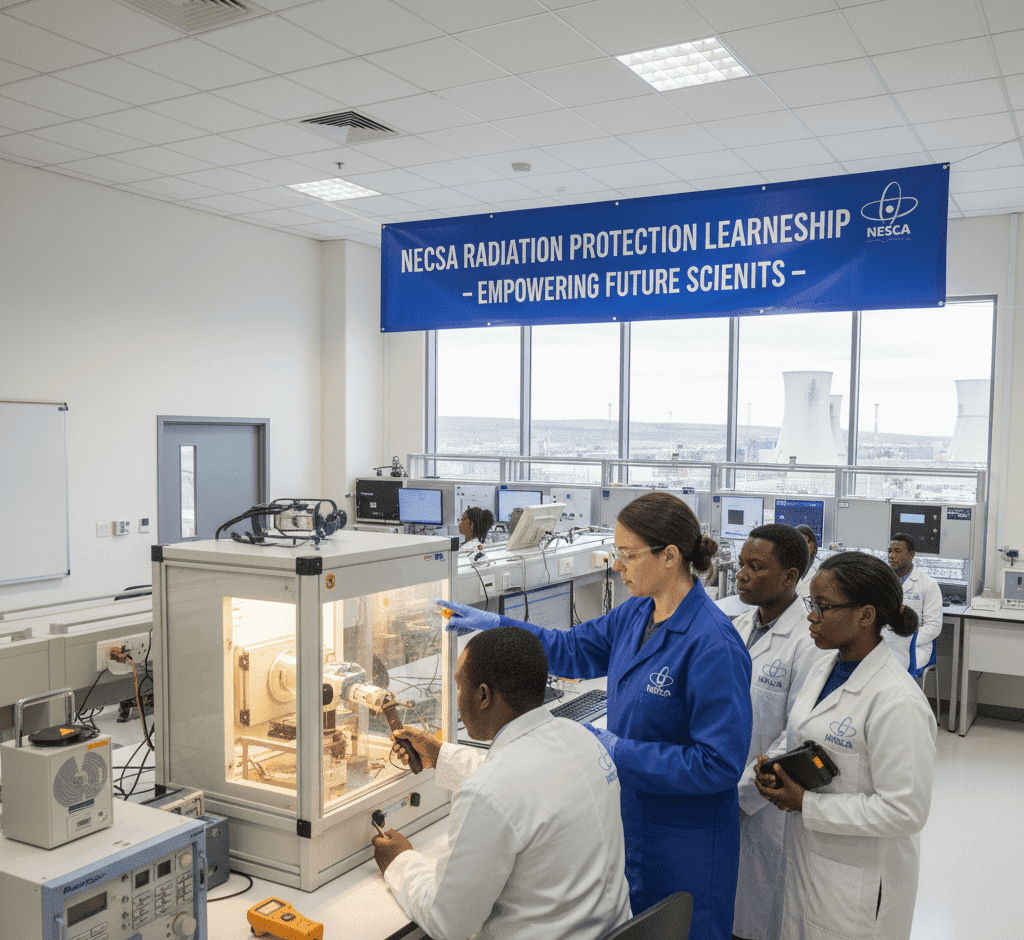
The learnership spans theoretical studies as well as extensive on-the-job training (OJT). Learners spend time at Necsa’s high-security nuclear research campus, where they are introduced to the professional standards, safety systems, and regulatory frameworks used in real nuclear-related environments.
This is a rare opportunity, as very few people in South Africa ever gain access to such facilities for structured training.
Necsa ensures that every learner is trained by specialists in radiation science, nuclear engineering, radiological safety and related fields.
As a result, the programme has become one of the most respected in the country. Many graduates eventually secure employment across different industries where radiation plays a role in operations. This is one of the reasons the radiation protection learnership 2026 is already attracting high interest from young applicants.
Who Can Apply? – Programme Requirements
Applicants who wish to be considered for the radiation protection learnership 2026 must meet specific requirements. These requirements ensure that candidates have the academic foundation and personal discipline needed to succeed in a field as technical and safety-driven as radiation protection.
Minimum Requirements Include:
• Age:
Applicants must be between 18 and 35 years old.
• Education:
A Grade 12 certificate with Mathematics and Physical Sciences is essential. These subjects are the backbone of radiation science and monitoring.
• Mandatory Documents to Upload:
• Certified copy of RSA Identity Document
• Certified copy of Grade 12 certificate
• Personal and qualification details
• Recent proof of residence
• Selection Testing:
Shortlisted candidates will be invited to complete an aptitude assessment test as part of the selection process. This ensures that only candidates with the potential to succeed in a technical scientific programme progress further.
These requirements are standard for scientific learnerships and allow Necsa to identify learners who show potential in technical fields. Applicants who meet the minimum criteria stand a strong chance of being considered for the radiation protection learnership 2026.
What You Will Learn During the Programme
The learnership is designed to turn a school-leaver or young student into a competent Radiation Protection Technician. This means gaining a deep understanding of how radiation works, how it is measured, how exposure is controlled, and how safety principles are applied in real workplaces.
The training is split into two core components:
1. Theoretical Training
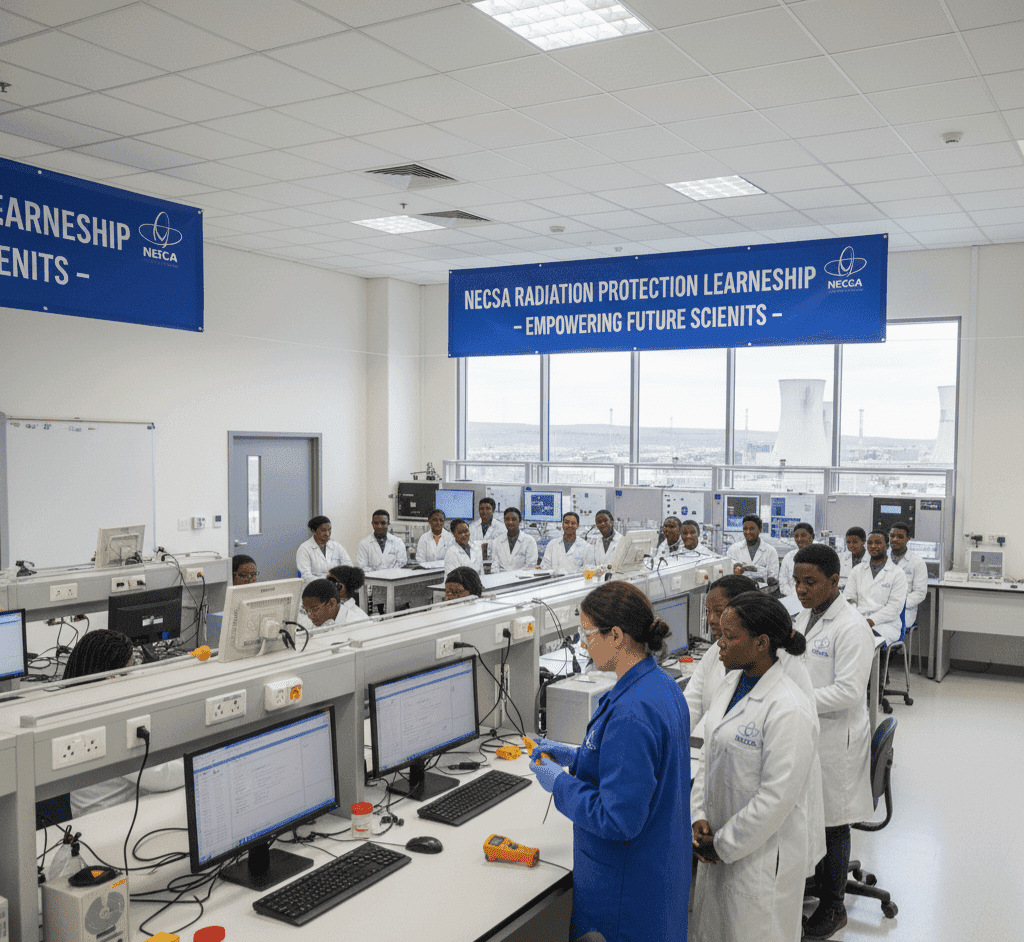
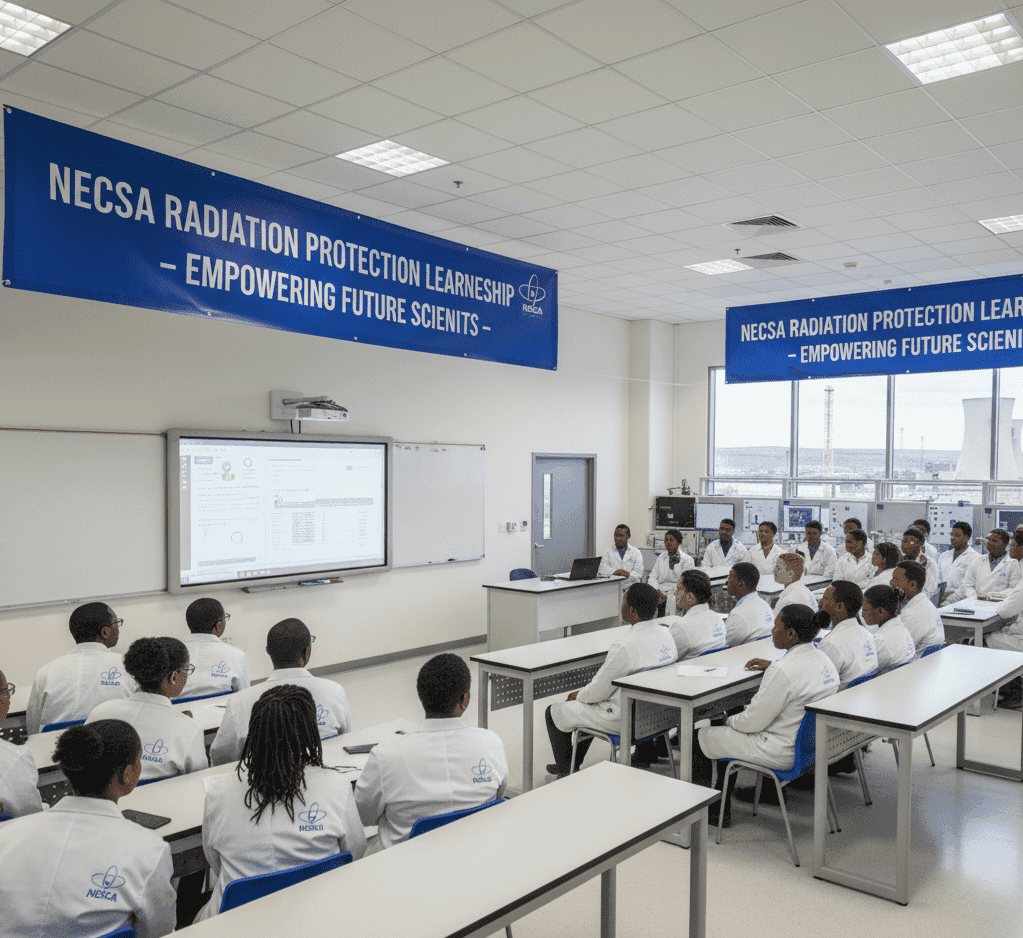
The programme begins with classroom-based learning. This is where learners develop the essential background knowledge required to operate safely in radiation environments.
Topics covered include:
• Basic radiation protection theory
• Understanding radiation sources and radioactive contamination
• How radiation interacts with matter
• Types of radiation measuring equipment
• Environmental and workplace monitoring requirements
• Factors affecting measurement accuracy
• Workplace safety procedures and protocols
• Basic science principles relevant to radiation (mathematics, physics, units)
This section of training ensures learners understand the principles behind their future duties. The theoretical portion is also designed to prepare candidates for the more demanding practical work that follows.
2. On-The-Job Training (OJT)
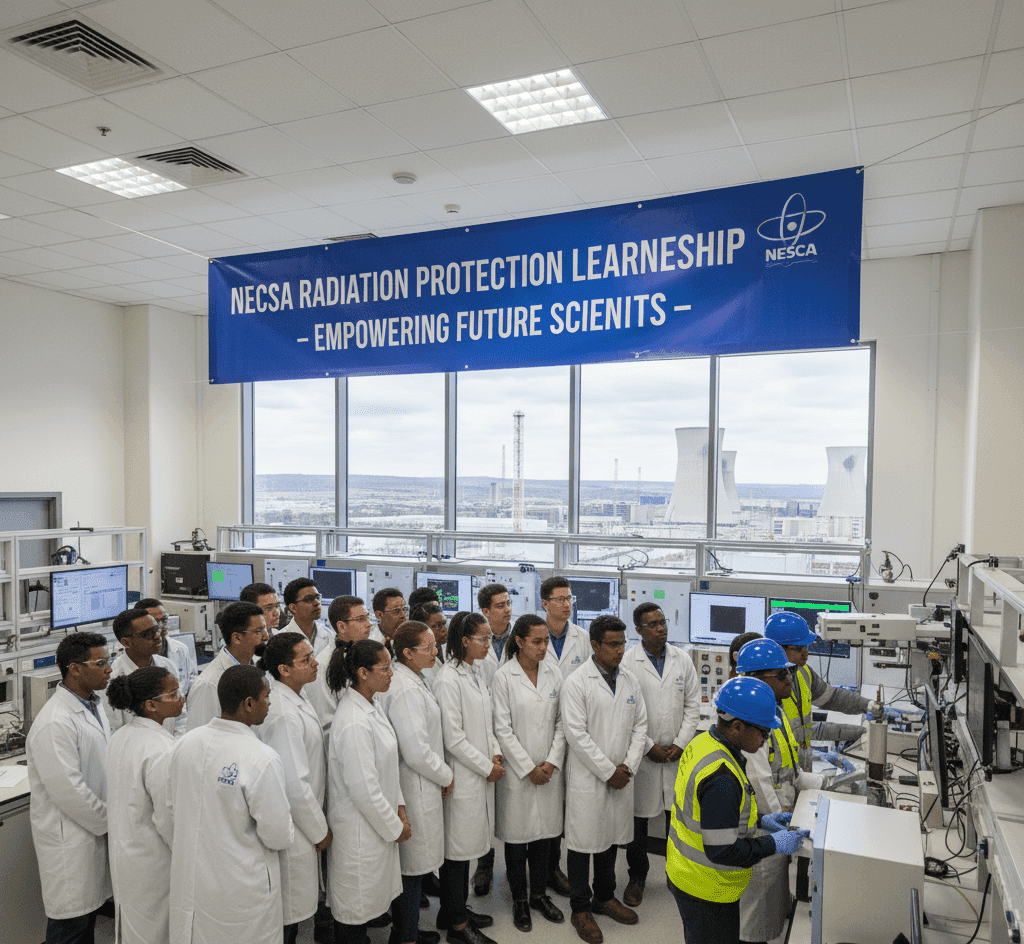
Once foundational theory is complete, learners are placed in actual working environments within the Necsa Group facilities. This is where the real transformation happens. During the OJT phase of the radiation protection learnership 2026, learners apply the theories they studied and gain hands-on experience in measuring, monitoring and managing radiation exposure.
On-the-job training includes:
• Performing radiation and contamination surveys
• Selecting appropriate monitoring equipment
• Conducting workplace inspections
• Recording, analysing and reporting monitoring results
• Ensuring compliance with radiation safety procedures
• Learning how professionals communicate safety risks
• Working under the supervision of radiation protection specialists
• Interacting with scientists, technicians and safety officers
The OJT component makes this programme especially valuable. It equips learners with practical workplace skills that significantly increase their employability.
What Learners Will Be Able to Do After Completing the Programme
After completing the radiation protection learnership 2026, learners will be equipped to:
• Communicate effectively about radiation hazards
• Monitor radiation and contamination according to scientific standards
• Select suitable radiation monitoring equipment
• Follow strict radiation safety procedures
• Understand workplace dynamics and maintain professional relationships
• Conduct radiation surveys across different work environments
• Apply theoretical knowledge to real monitoring tasks
This programme produces professionals capable of working in sensitive, technical and highly regulated environments.
Career Opportunities After Completing the Learnership
Graduates of the radiation protection learnership 2026 have many pathways available. Radiation Protection Technicians are needed across numerous industries, making the qualification highly valuable and widely applicable.
Industries Where Graduates Can Work Include:
• Mining – Radiation Technician roles in mineral extraction environments
• Medical Sector – Radiology departments, oncology clinics, nuclear medicine units
• Nuclear Industry – Necsa, Koeberg Nuclear Power Station
• Industrial Sectors – Manufacturing, food irradiation, engineering firms
• Construction – Infrastructure projects involving radiography testing
• Environmental Monitoring – Agencies that monitor radiation levels in the environment
Because radiation monitoring is a legal requirement in many industries, professionals trained through this programme are always in demand.
Graduates often secure roles such as:
• Radiation Protection Officer (RPO)
• Radiation Safety Technician
• Contamination Monitoring Technician
• Environmental Radiation Surveyor
• Nuclear Facility Technician
• Radiological Compliance Officer
This explains why the radiation protection learnership 2026 is viewed as a significant opportunity for young South Africans wanting to enter specialised technical careers.
Application Reference Numbers Per Province
Applicants must use the correct reference number for their province to avoid being disqualified.
Province Reference Number
Eastern Cape RPTEC2026
Free State RPTFS2026
KwaZulu-Natal RPTKZN2026
Limpopo RPTLIMP2026
Mpumalanga RPTMP2026
Northern Cape RPTNC2026
North West RPTNW2026
Make sure your reference code is accurate before submitting your application for the radiation protection learnership 2026.
Important Notices
• Only South African citizens may apply
• No accommodation will be provided
• Applicants must not have participated in any previous Necsa learnerships or internships
• Applications must be done strictly online
• People with disabilities are encouraged to apply
Because the radiation protection learnership 2026 is highly competitive, it is important to submit your application early and upload all required documents correctly.
How to Apply
Applications must be submitted online before the closing date.
Applicants who do not receive feedback within 30 days after the closing date should consider their application unsuccessful.
If you need more details, you may contact:
• Email: InforNLA@necsa.co.za
• Tel: 012 305 3901 / 3809
Application Process
(Standard section added as requested)
• Gather all required documents
• Ensure your certificates are recently certified
• Confirm your provincial reference number is correct
• Complete the online application form
• Upload all documents clearly and accurately
• Submit before the closing date
• Wait for feedback regarding aptitude testing
Submitting early increases your chances of consideration for the radiation protection learnership 2026.
Other learnerships
• Apply for training programme at Coca-Cola Beverages South Africa
• Apply for YES4Youth Programme at Bidvest International Logistics
Dailyspark is on Social media platforms for more updates, follow our WhatsApp channel
Leave a Reply